Skip to content
If you are looking for the one NYC neighborhood that somehow manages to feel like a postcard, a movie set, and someone’s cozy hometown all at once, then this article is the perfect place for you.
I’ve packed in everything you need to know about the West Village, its exact location, the crooked streets that break every rule of Manhattan’s grid, jazz-filled evenings, cupcake pilgrimages, candlelit trattorias, storybook brownstones, and whatnot.

Exploring this neighborhood will not only make for a fantastic afternoon, it will honestly change how you picture New York altogether. This article doesn’t just teach you where the West Village sits on a map,
you’ll also learn what to see, what to do, where to eat, and how it stacks up against Greenwich Village right next door.
So without a delay, let’s explore it all before you even think about packing for your next trip.
Where Is the West Village Located?
The West Village sits on the far western edge of Lower Manhattan, hugging the Hudson River, right next door to Greenwich Village. It covers the pocket west of Seventh Avenue South, dipping down toward Houston Street and stretching up to around 14th Street.

Bank Street, Bleecker, Christopher, Perry, and Charles Street are among the main streets that make up the neighborhood.
Nearest subway stops: Christopher Street-Sheridan Square on the 1 train, or West 4th Street where the A, C, E, B, D, F, and M all meet.
West Village vs Greenwich Village: Is the West Village the Same as Greenwich Village?
This one trips up almost everyone planning a trip here, so let’s untangle it properly.
Short version, no, they’re not the same thing. But they’re not totally separate either, if that makes sense. It’s a bit messy, honestly.
Think of it this way. Greenwich Village is the whole big neighborhood, all the history attached to it, and West Village is just one part of that, the piece sitting closest to the river.
So technically, every West Village street is also Greenwich Village, but not every Greenwich Village street gets to call itself West Village. Sounds like a riddle, sure. Even longtime locals mix the two up half the time, so don’t feel bad if you’re confused too.
What actually separates them comes down to the feeling you get walking around. Greenwich Village still has that old bohemian buzz, folk musicians and poets, NYU students out at all hours.
West Village feels quieter than that. Dreamier, somehow. Also, let’s be honest, noticeably more expensive and polished these days. Ivy climbing brick walls, fewer backpacks around, more tiny dogs wearing jackets nicer than most people’s coats.
So next time this comes up, you can say it straight: West Village is basically Greenwich Village’s prettiest little corner, not the full story, just the best chapter of it.
What to See in the West Village, NYC
There’s a lot packed into these few blocks, so here are the highlights worth prioritizing.
Christopher Street is where things get heavier in a good way. You’ve got the Stonewall Inn just sitting there, looking like any other bar on the block, until you remember what actually happened here back in 1969.
The High Line kicks off nearby, and yes, it’s worth doing even if it’s not your first time. Old train tracks turned into a park, unexpected art scattered along the way, it never really gets old.
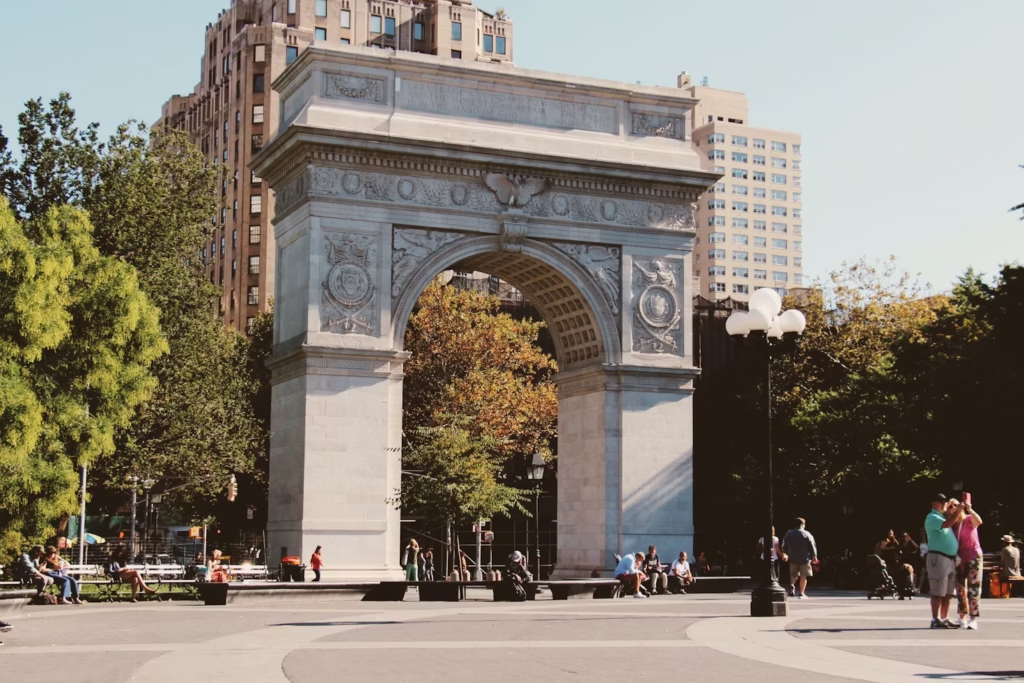
Washington Square Park technically belongs more to Greenwich Village, but nobody really draws that line, so it ends up on every itinerary anyway. Chess hustlers, street performers, the occasional random piano being wheeled around like it’s nothing.
Bleecker Street surprises a lot of first-timers. Expect boutiques, sure, but also a whole stretch of jazz clubs and comedy spots tucked in between.
Cherry Lane Theatre on Commerce Street is easy to miss if you’re not paying attention, tucked away like it’s hiding. It happens to be the oldest Off-Broadway theater still running in the city.
The Cottage homes on Charles Street, along with Grove Court right nearby, look like something out of a storybook. Easily one of the most photographed corners of the neighborhood.
What to Do in West Village, NYC
Seeing things is one part of it. Doing things is where the real experience happens. Here’s roughly how to spend a day here, or three.
-
Grab coffee at an independent café: Skip the chains and duck into a tiny local spot. Ask what they’d recommend and just walk from there, no plan needed. This place was basically made for wandering until your feet start complaining a little.
-
Catch live jazz: Seventh Avenue South or Bleecker Street have small clubs where some spots barely even charge a cover, just a nod at the door, refreshingly old-school for a city that’s gotten expensive about everything.
-
Go thrifting: The consignment shops here punch way above their weight for anyone who enjoys digging through racks.
-
Walk the Hudson River Park promenade at sunset: The light turns golden and a little hazy out there, and on a clear evening you’ll even catch New Jersey glowing across the water.
What Is the Most Popular Food in the West Village?
Where to Eat in West Village:
-
Pizza: Old-school, thin, crispy-crust joints that have been slinging pies here for generations. Expect a friendly rivalry between a few legendary spots over who does it best.
-
Bistros and trattorias: Cozy French and Italian spots with checkered tablecloths and candle wax dripping down old wine bottles. Menus barely change, and that’s the point.
-
Brunch: Weekend mornings mean lines outside cafés for eggs benedict, thick avocado toast, and mimosas that never seem to run dry.
-
Dessert: A cupcake bakery on Bleecker that’s become a genuine pilgrimage stop, tour buses included.
Coffee: Skip the chains, tiny independent cafés are scattered all over and worth the detour.
What to See in Greenwich Village (Beyond the West Side)
These two neighborhoods really do blur into each other, so here are a few spots that technically belong to the wider Greenwich Village but naturally end up on the same day trip.
Washington Square Park deserves another mention here, it really is the heart of this whole area, not just some side stop.
NYU’s campus spreads through here too, giving the whole place a younger, louder buzz compared to the quieter streets over in the West Village.

MacDougal Street still holds onto that old beatnik, folk-music spirit. Cafés where poets and musicians used to gather back in the day, some of them still open in one form or another.
The Comedy Cellar sits below the sidewalk, easy to walk right past, but legendary the second you actually step inside.
The line between where West Village ends and Greenwich Village starts feels more like a suggestion than an actual rule. Nobody’s checking papers at some invisible border.
You’ll drift from one into the other without even realizing it, and that’s kind of the whole charm.
What to Do in Greenwich Village
Once you’ve had your fill of the West Village side, don’t just head straight back to your hotel. This side of the neighborhood runs on its own rhythm and deserves its own evening.
-
Catch a comedy show: Legendary comedy clubs tucked below street level here. Doesn’t matter if you don’t recognize a single name on the lineup, that’s honestly half the fun.
-
Hang out in Washington Square Park: Sit by the fountain, watch street performers do their thing, maybe get pulled into a chess match with a hustler who’s clearly been running this game for decades.

-
Browse the used bookshops: Dusty, cramped, gloriously chaotic little places where a quick browse can easily turn into an hour.
-
Take in some live folk music: MacDougal Street still has a handful of old venues hosting acoustic sets most nights, worth grabbing a seat and settling in for a while.
- Soak up the NYU energy: On weekends, the campus buzzes with students on benches, random music, maybe a rally nearby. A totally different pulse from the quiet brownstone streets close by.
Where to Eat in Greenwich Village
Food again, because no NYC guide really means anything without covering this part properly.
-
Breakfast: Old-school diners serving pancakes and bottomless coffee since before smartphones existed. Cracked vinyl booths, a menu that reads like a small novel.
-
Lunch: Classic delis or slice joints near Washington Square. Nothing fancy, just a folded slice eaten standing up on the sidewalk like a local.
-
Dinner: Cozy, candlelit trattorias and tucked-away wine bars, tables close enough that conversations with strangers happen without anyone planning it. Pasta and a decent glass of red make for a solid night.
-
Dessert: Tiny gelato counters and old Italian pastry shops between MacDougal and Bleecker, known for cannoli perfected over generations.
Late night: A handful of cafés stay open absurdly late for anyone needing caffeine at 2 a.m., usually packed with students cramming and writers chasing inspiration.
Frequently Asked Questions: Ultimate Guide to the West Village
What is West Village famous for?
Its crooked, tree-lined streets, Stonewall’s LGBTQ+ history, and that old bohemian, artsy soul that still lingers in its jazz clubs and cafés. Add in the brownstones and some seriously good pizza, and you’ve got the whole picture.
Which is nicer, East Village or West Village?
West Village feels quieter and prettier, all ivy-covered brownstones and candlelit bistros. East Village keeps a grittier, younger energy alive, so honestly, it depends what mood you’re chasing.
What is the West Village known for?
Stonewall, Off-Broadway theater at Cherry Lane, jazz clubs, and a residential charm that makes people never want to leave. Also, weirdly, for being really easy to get lost in.
What are the top attractions in the West Village?
Christopher Street and Stonewall Inn, Bleecker Street, Cherry Lane Theatre, and the storybook blocks around Charles Street and Grove Court. Add a sunset walk along the Hudson for good measure.

